
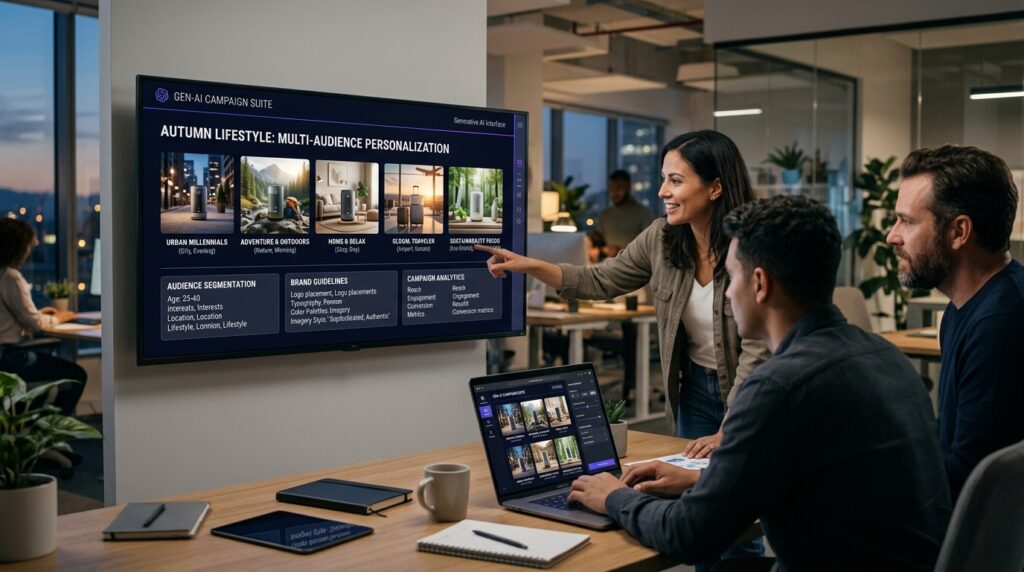
Artificial Intelligence has transformed how marketers approach visual campaigns. Today, modern free AI image generators allow creators to adapt, test, and personalise visual assets at an unprecedented pace.
Creating an impactful campaign no longer requires waiting days or weeks for external studios to produce every single localized variation of an image. Free tools and accessible freemium tiers allow growth teams to generate tailored graphics across different customer segments, geographical locations, channels, and buyer journeys without rebuilding designs from scratch.
However, effective personalisation does not mean overwhelming users with endless, hyper-specific variations. Sustainable visual personalization balances relevance with brand cohesion, audience trust, and data privacy. In this guide, we explore the strategic advantages of deploying free AI image generators for personalized content marketing, key privacy guardrails, and actionable production frameworks.
Benefits of Free AI Image Generators for Personalised Content
Modern marketing requires visual velocity. Deploying generative tools strategically unlocks four core operational advantages for lean teams:
1. Cost-Effective Alternative for Small Marketing Teams
Commercial photography, licensing fees, custom vector illustrations, and endless revision cycles become cost-prohibitive when an omni-channel campaign demands dozens of creative iterations. Accessible free AI image generators reduce manual overhead during initial concept ideation and repetitive variation production.
Leading platforms offer accessible entry tiers. For instance, Adobe Firefly provides a generous free plan with renewable daily credits, while Canva and ChatGPT provide free image creation allowances. This democratization allows startups, local service providers, and niche agencies to compete visually with large enterprise budgets.
For an overview of the underlying mechanics powering these platforms, explore our technical breakdown of How AI Image Generators Work: The Science Behind AI Art.
2. Tailored Visuals for Segmented Audiences
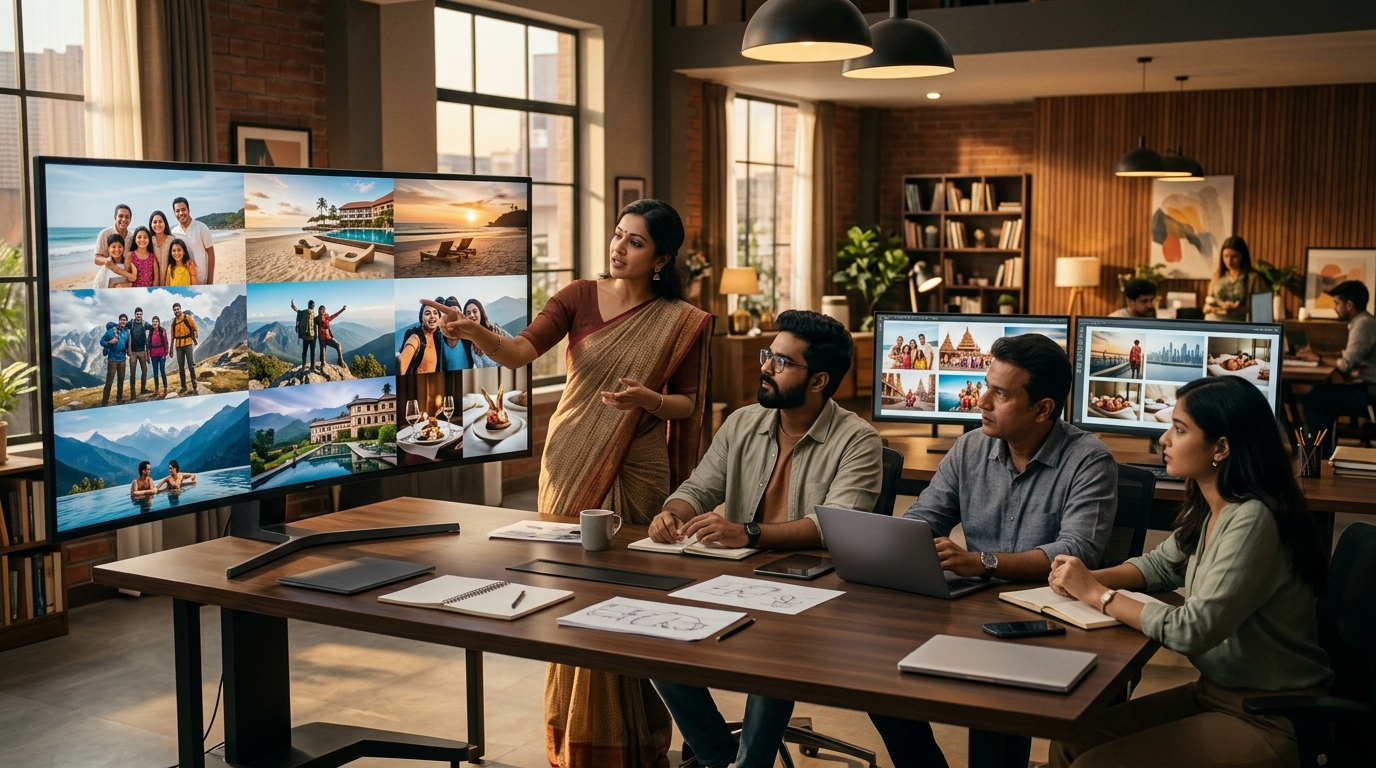
Rather than distributing a single, generic visual to an entire market, creators can tailor campaigns around meaningful demographic and cultural nuances. For example, an Indian travel and hospitality enterprise can generate distinct visual variations of a single summer campaign:
- Family Vacationers: Spacious resort villas, child-friendly pool amenities, and shared dining tables.
- Weekend Couples: Intimate boutique retreats, candlelit mountain balconies, and serene sunsets.
- Corporate Bleisure Travellers: Minimalist executive workspaces, high-speed connectivity hubs, and urban skyline lounges.
- Regional Celebrations: Culturally nuanced festive themes customized for Diwali, Durga Puja, or Onam campaigns across distinct states.
The overarching value proposition remains unified, while the visual context resonates directly with the target recipient.
3. Dramatic Reduction in Turnaround Time
A standard creative workflow—spanning briefs, concept sketches, photo selection, feedback, and retouching—can take several days. Generative vision models compress the initial ideation stage into seconds. Content creators can formulate a brief, test multiple visual aesthetics, pick the strongest direction, and hand it to senior designers for final typography and brand refinement.
Furthermore, image-to-image and conversational inpainting capabilities mean you don’t need to rewrite prompts from scratch. You can instruct the engine to alter background lighting, swap a seasonal backdrop, or change a model’s attire while preserving the underlying composition.
4. Scaling Visual Output to Meet Multi-Channel Demand
Today’s marketing mix extends across dozens of distinct touchpoints. A single promotional push often requires assets configured for:
- Blog hero visuals (16:9)
- LinkedIn feed banners (1.91:1)
- Instagram square posts (1:1) and Stories/Reels (9:16)
- Google Business Profile local updates
- Email newsletter banners and high-converting PPC display ads
Rather than manually adjusting every canvas, free AI image generators allow teams to scale output dynamically across dimensions and audience segments.
Learn how to connect visual generation directly into automated publishing pipelines in our comparison of n8n vs Make.com vs Zapier for AI Content Pipelines.
Privacy and Data Governance: Personalise the Experience, Not the Surveillance
While generative personalization is powerful, boundaries are critical. Marketers often possess customer purchase histories, granular browsing behavior, and location coordinates. That does not mean private, personally identifiable information (PII) should ever be fed into an external generative model.
Data Governance and Privacy Principles
In India, compliance with the Digital Personal Data Protection (DPDP) Rules requires organizations to uphold clear user consent, purpose limitation, and robust data minimization. Recent studies examining Indian Gen Z consumers indicate increasing sensitivity toward intrusive ad targeting.
The Golden Rule: Personalize using broad, aggregated cohort trends (such as seasonal preferences, industry verticals, or regional themes) rather than sensitive individual profiles.
Maintaining Brand Cohesion Across Generated Assets
The greatest risk in adopting free AI image generators without governance is visual fragmentation—where one article features 3D anime renders, the next uses dark photorealism, and a third looks like a generic stock photograph. To prevent this, marketing teams should establish a structured Brand Vision Layer:
- Defined Color Palette: Specify exact hex codes and dominant ambient tones (e.g., warm golden undertones, high-contrast monochrome).
- Photographic Guidelines: Document preferred camera angles, focal lengths (e.g., 35mm or 50mm documentary style), and lighting styles.
- Cultural Authenticity: Ensure diverse, realistic, and culturally accurate depictions of settings, attire, and professional environments.
- Negative Prompt Library: Maintain standard negative constraints to eliminate unnatural gloss, distorted hands, and synthetic artifacts.
To see how brands establish unified visual identities without generic stock photos, read our guide on Beyond Stock Photos: Crafting Unique Visuals with AI Image Generators.
Human Oversight: The Quality Assurance Firewall
Generative vision engines produce speed; humans provide strategy, cultural discernment, and ethical judgment. Before publishing any AI-generated marketing visual, conduct a five-point quality audit:
- Anatomical Fidelity: Check hands, eyes, dental details, and joint geometry.
- Logo and Brand Integrity: Ensure corporate marks are crisp and added manually in post-production rather than generated via AI.
- Cultural Representation: Avoid clichéd caricatures and verify that localized imagery accurately reflects the target demographic.
- Commercial Licensing: Confirm that the tool’s usage tier authorizes commercial distribution.
- Topical Relevance: Verify that the visual supports the core informational value of the content.
For brands operating in sensitive sectors like healthcare, law, or finance, visual credibility directly impacts your search footprint. Review our EEAT for YMYL Content Checklist to ensure compliance with strict search quality guidelines.
How Businesses Can Build a Simple Personalised AI Image Workflow
Setting up an agile visual production engine does not require enterprise software investments:
- Identify the Target Cohort: Define the audience persona, channel, and reading context.
- Draft a Contextual Prompt: Combine core subject, setting, mood, and technical camera parameters into a standardized template.
- Generate 4 to 6 Variants: Compare different angles, lighting setups, and compositions using free AI image generators.
- Apply Post-Processing Layouts: Import the strongest visual into Canva or Photoshop to add typography, CTA banners, and verified brand assets.
- Monitor Engagement Analytics: Track conversion rates, dwell time, and social click-throughs to optimize subsequent iterations.
For agencies scaling client deliverables, see our strategic playbook on How to Price Your AI Automation Agency Services and our analysis of emerging trends in 5 Ways Agentic AI Is Changing Content Strategy.
Integrating Visuals into a Holistic Content Ecosystem
Visual personalization is most effective when embedded within a comprehensive digital strategy. Modern search engines and conversational engines (like ChatGPT and Google Gemini) evaluate content as complete topic ecosystems rather than isolated blog posts.
Explore our deep-dive on Pillar-Cluster Content Architecture to learn why structured content clusters outperform random articles, and discover actionable optimization techniques in our guide to Search Everywhere Optimisation for Indian Businesses.
Frequently Asked Questions
How do free AI image generators help personalize marketing content?
Free AI image generators allow businesses to quickly create visual variations tailored to specific customer cohorts, locations, and seasonal campaigns without commissioning separate photoshoots for each asset.
Can businesses use free AI image generators commercially?
Yes, provided the specific tool’s license grants commercial rights on that tier (e.g., Adobe Firefly and Canva Free). Always verify the platform terms before launching commercial advertising campaigns.
How do you keep brand visuals consistent with generative AI?
Establish strict brand guidelines specifying color palettes, focal lengths, lighting styles, and negative prompts, and route generated imagery through human designers for final logo and typography placement.
Is customer data safe when using free AI image generators?
Never upload identifiable personal data, unreleased product schematics, or private customer photos to public AI platforms. Focus personalization on broad audience traits rather than sensitive personal identifiers.
Which platforms offer the best free tiers for marketing visuals?
Adobe Firefly, Canva Magic Media, ChatGPT Free, and Ideogram all provide generous free tiers or renewable monthly credits suited for visual content creation.
Explore our complete archive of technical guides, digital marketing tutorials, and AI platform benchmarks on the HuAI Content Blog.
Pingback: Free Online AI Art Generators in 2026: Creative Guide