
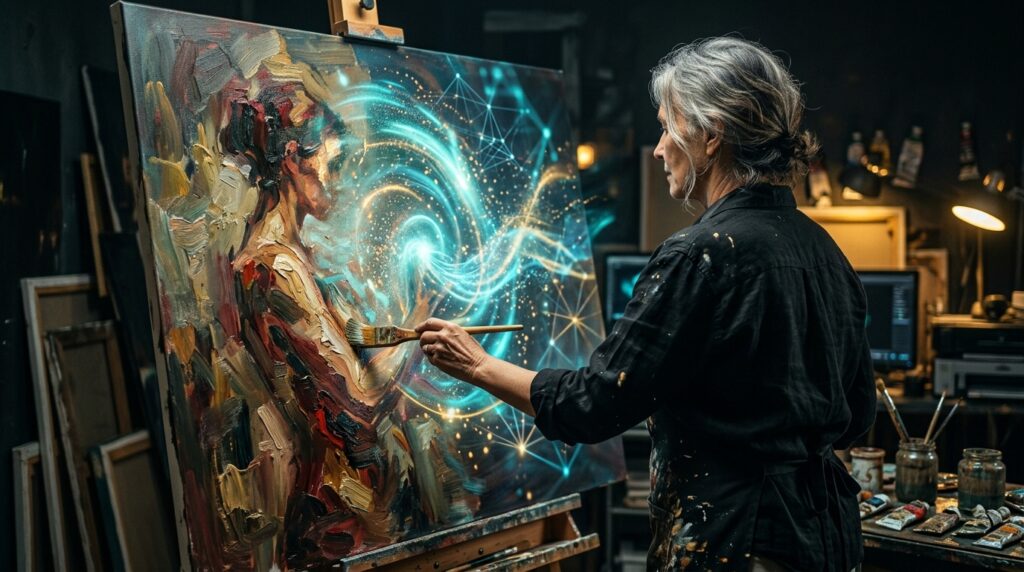
As artificial intelligence generates images, music, and prose, the link between AI art generators and creativity sparks profound questions. Where does human imagination end, and algorithmic synthesis begin?
For centuries, human culture viewed artistic expression as uniquely personal. A painter chooses an earthy pigment to evoke melancholy. Meanwhile, a photographer patiently waits hours for twilight shadows to align. A graphic designer tests dozens of typographic layouts before finishing a poster.
Today, generative models introduce an entirely different creative interface. A creator can describe an intricate scene in natural language, upload a compositional sketch, and receive photorealistic renders within seconds. Consequently, the conventional boundaries surrounding visual craft are shifting rapidly.
However, this transformation does not mean computers have become conscious artists. Instead, it invites creators to rethink artistic authorship. What happens when humans create by directing intelligent software rather than executing every manual stroke? This guide examines the philosophical implications, practical benefits, ethical challenges, and collaborative future of modern AI art.
The Philosophical Intersection of AI Art Generators and Creativity
Generative software directly challenges an ancient cultural assumption. Traditionally, people believed visual innovation requires physical human craftsmanship. Modern diffusion models synthesize intricate digital paintings, editorial photographs, and isometric illustrations from text prompts. Yet, an essential philosophical distinction remains central to this debate.
Specifically, algorithms generate visual outputs, but humans supply intention, context, and aesthetic judgement. An algorithm does not experience grief, celebrate triumph, or understand existential irony. In contrast, the human artist defines the creative purpose.
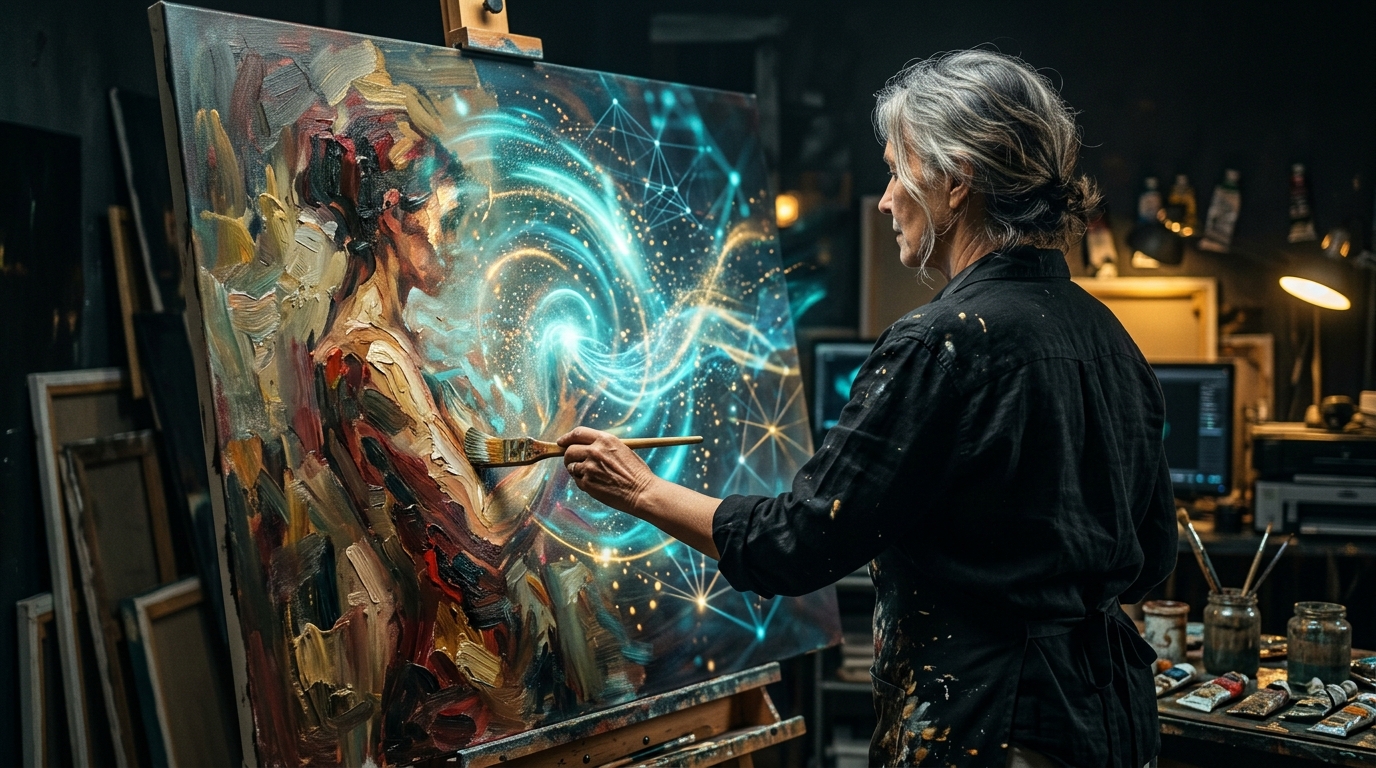
Consider the numerous subjective decisions involved in an AI-assisted creative process:
- Conceptualization: The artist conceives the overarching theme and emotional tone.
- Prompt Architecture: The creator refines descriptive keywords, atmospheric lighting, and stylistic parameters.
- Iterative Curation: The user systematically rejects derivative renders and pinpoints promising variations.
- Editorial Refinement: The designer applies inpainting, colour grading, and compositing to complete the vision.
Therefore, creativity exists throughout every stage of the artistic workflow rather than solely during manual execution. The question is no longer whether machines can feel creative. Rather, we must ask which parts of the creative process constitute authentic human imagination.
Accelerating Concept Exploration Through Generative Tools
Beyond philosophical debates, speed represents the most visible practical advantage of generative imagery. Modern digital enterprises require an unprecedented volume of high-quality visuals. Websites need hero banners, social channels demand daily engagement graphics, and marketing campaigns test multiple variations.
Historically, producing comprehensive visual concepts required days of manual drafting. In contrast, generative tools compress initial concept development into minutes. For instance, an art director can generate five distinct visual moods for a film scene before lunch.
Similarly, small production teams can explore multiple creative directions without exhausting their budgets. You can learn more about structured multi-format workflows in our guide to automated edits and video post-production workflows. In addition, rapid prototyping allows creative teams to shift focus from manual labour to strategic curation.
Nevertheless, speed alone does not ensure artistic excellence. While rapid generation accelerates ideation, discerning human curation remains essential for separating compelling art from generic visual noise.
Expanding Access to Creative Experimentation Across Industries
Generative image models significantly lower the barrier to visual experimentation. In previous decades, creating a complex digital illustration demanded extensive training in anatomy, perspective, and digital painting software. Today, non-illustrators can express sophisticated visual ideas across multiple domains.
For example, writers can visualize intricate fantasy environments for upcoming novels. Meanwhile, independent game developers can rapidly storyboard game mechanics. Small business owners can design bespoke promotional assets without exorbitant stock fees.
However, accessible generation does not instantly turn every prompt engineer into a seasoned artist. Fundamental visual principles remain indispensable. Consider how artistic judgement shapes compelling visual assets:
- Compositional Harmony: Balancing negative space, focal contrast, and optical balance.
- Colour Theory: Selecting palette temperatures that evoke intended emotional responses.
- Narrative Context: Ensuring visual elements reinforce a cohesive brand or literary story.
- Cultural Resonance: Avoiding clichéd visual tropes while respecting historical iconography.
In fact, as synthetic rendering becomes frictionless, human aesthetic discernment becomes even more valuable. For a detailed breakdown of accessible platforms, explore our review of free online AI art generators in 2026. In addition, discover how creators apply visual customization in our analysis of personalising content with free AI image generators.
How Generative Models Process Visual Concepts in Latent Space
To evaluate generative creativity objectively, we must understand how diffusion algorithms function. Skeptics often assume that generative models merely collage fragments of copyrighted artwork retrieved from the internet. However, this assumption misrepresents the underlying neural architecture.
Modern diffusion models do not store compressed image databases. Instead, they learn high-dimensional statistical representations within latent space during training. In our guide to the science behind AI image generators, we explain how neural networks discover patterns across image-text pairs.
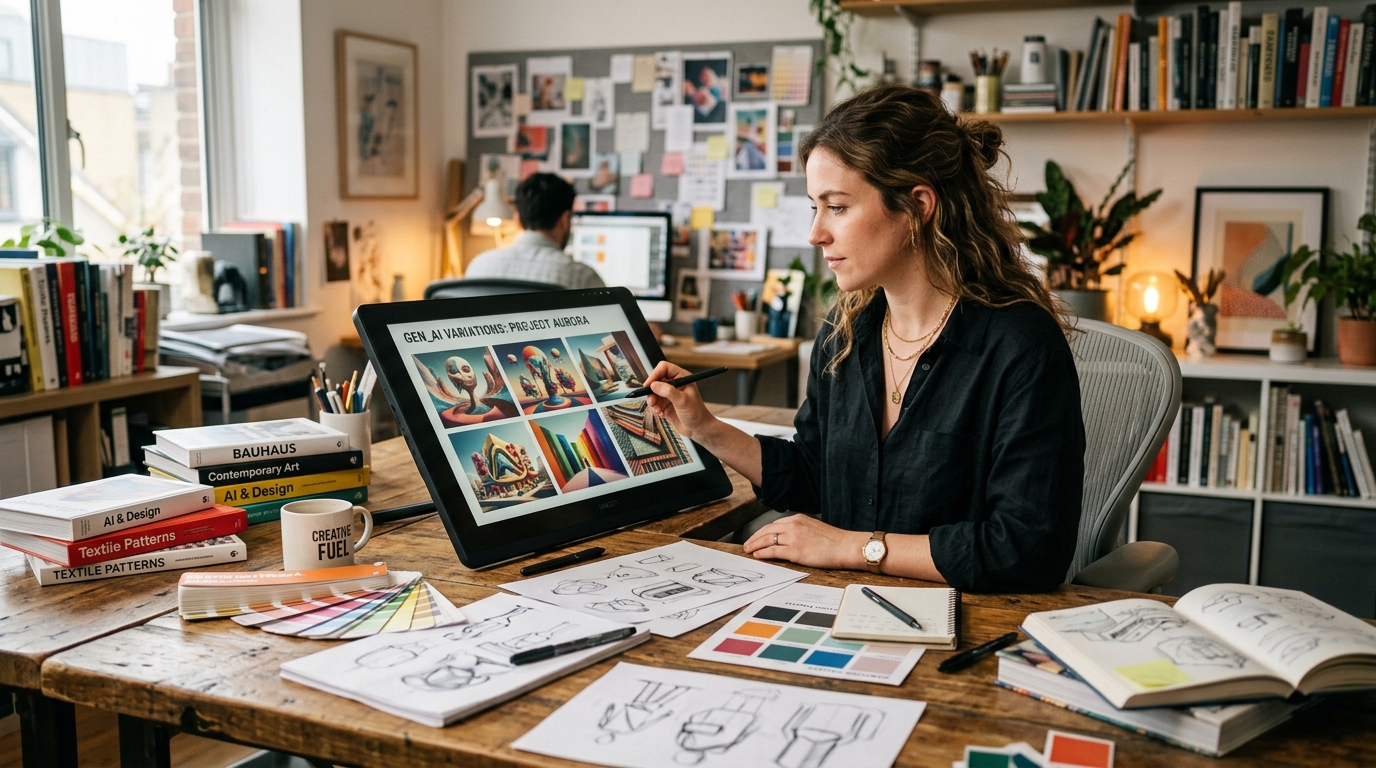
When an artist prompts a model for “a rain-slicked neon alleyway at twilight,” the network draws upon learned concepts. It understands how asphalt reflects ambient neon glow, how mist diffuses streetlamp light, and how wide-angle perspectives distort vertical architecture.
Consequently, the algorithm synthesizes entirely new pixel arrangements based on mathematical probabilities. This process closely parallels how human painters draw upon decades of visual memories to inform a fresh canvas.
Is AI Devaluing Traditional Art or Redefining Artistic Roles?
Economic anxiety naturally accompanies rapid technological adoption. Many illustrators, photographers, and graphic designers express legitimate concern that automated generation will devalue creative labor. To understand this impact, we must distinguish between routine production and strategic art direction.
For routine asset production—such as stock backgrounds, generic banner graphics, and simple social icons—automation will inevitably reduce manual billable hours. However, high-value artistic direction operates on a fundamentally different plane.
Consider a luxury brand launching a global fragrance campaign. The project requires cultural nuance, emotional resonance, bespoke styling, and authentic human connection. An algorithm cannot negotiate stakeholder feedback, interpret brand heritage, or orchestrate complex on-location narratives.
Historically, the emergence of photography in the 19th century triggered identical fears among portrait painters. Yet, photography liberated painters from pure literal replication, catalyzing Impressionism, Cubism, and modern abstraction. Similarly, generative software allows contemporary creators to transcend manual repetition and embrace expansive conceptual roles.
Why Human Creative Direction Governs Meaningful Art
Great visual storytelling depends on intent rather than raw pixel fidelity. If two individuals enter identical text prompts into the same diffusion model, their final creative outcomes can diverge radically. Why does this disparity occur?
The difference lies in creative direction. One user accepts the initial random output. Meanwhile, a skilled art director refines parameters, adjustments, seed variations, and post-processing filters.
Furthermore, legal frameworks strongly reinforce the necessity of human creative agency. In its formal policy guidance on artificial intelligence, the U.S. Copyright Office confirmed that purely AI-generated works lack human authorship and cannot receive copyright protection. However, works that integrate sufficient human expressive control—such as extensive manual modification, arrangement, and creative curation—remain fully copyrightable.
Consequently, businesses seeking protectable commercial intellectual property must maintain substantial human involvement throughout their production pipelines. For teams building sustainable content engines, adopting a pillar-cluster content architecture ensures strategic human oversight across every creative asset.
Weighing the Ethical Pros and Cons of Algorithmic Art
An honest evaluation of synthetic art requires confronting both its transformative potential and its ethical complexities. Responsible creators must weigh these factors conscientiously.
Key Creative and Economic Benefits
- Accelerated Ideation: Creative directors can prototype complex mood boards and storyboards in hours rather than weeks.
- Democratized Visualization: Founders and educators can communicate complex visual ideas without prohibitive design budgets.
- Creative Augmentation: Digital painters utilize generative infilling and canvas expansion to streamline tedious manual tasks.
- Multimodal Art Forms: Artists can pioneer hybrid installations blending algorithmic animation, spatial audio, and interactive projections.
Critical Ethical Concerns: Datasets, Attribution, and Deepfakes
Conversely, the rapid deployment of generative models introduces significant societal risks:
- Training Data Consent: Prominent artists rightly question the inclusion of their copyrighted portfolios in training datasets without licensing compensation.
- Visual Misinformation: Malicious actors can generate deceptive synthetic imagery to manipulate political discourse or financial markets.
- Non-Consensual Deepfakes: Unregulated generation presents severe personal safety concerns regarding impersonation and reputation damage.
- Market Consolidation: Disproportionate economic rewards risk concentrating among large compute providers rather than working artists.
Transparency and Provenance: The Foundation for Responsible Innovation
Addressing these ethical dilemmas requires robust technological and regulatory safeguards. Fortunately, the creative technology industry is actively developing universal standards for visual provenance.
Leading organizations, software developers, and camera manufacturers have established the Coalition for Content Provenance and Authenticity (C2PA). This open technical specification embeds cryptographically signed metadata into digital media files. These “Content Credentials” record an asset’s complete lineage. Specifically, they detail whether an image was photographed, edited, or synthesized by an AI model.
Additionally, institutions like the Victoria and Albert Museum have long celebrated algorithmic pioneer Harold Cohen and his historic AARON program. Exhibiting computer-assisted art alongside traditional masterworks underscores that technology and human authorship have always coexisted.
Ultimately, transparency fosters digital trust. When creators openly disclose algorithmic tools and embed cryptographically verifiable credentials, audiences can celebrate artistic innovation without fearing deception.
A Practical Blueprint for Directing AI Art Generators
To maximize creative control and maintain distinctive artistic authorship, creative professionals can implement this systematic five-step methodology:
- Establish Conceptual Intent: Define the emotional narrative, subject symbolism, and core message before opening any generator.
- Develop Controlled Prompts: Structure prompts logically, specifying camera lens focal lengths, lighting ratios, color palettes, and historical influences.
- Curate and Filter Iterations: Generate exploratory batches, systematically discarding generic outputs while tagging intriguing compositional anomalies.
- Refine with Inpainting: Import outputs into image editors to correct anatomical flaws, adjust typography, and harmonize contrast.
- Document Provenance and Licensing: Record tool settings, maintain revision histories, and verify commercial usage rights before client deployment.
To replace stock imagery with bespoke assets, explore our guide on crafting unique visuals with AI image generators.
Frequently Asked Questions
How do AI art generators and creativity work together in professional workflows?
In professional studios, artists use AI generators as collaborative ideation assistants. The software handles rapid iteration and mood boarding, while human art directors guide composition, emotional resonance, and final craftsmanship.
Can AI-generated artwork receive legal copyright protection?
Under current legal precedents, purely prompt-generated artwork cannot receive copyright protection. However, works that demonstrate substantial human creative selection, arrangement, or post-generation digital alteration remain eligible for copyright.
Does using AI art generators make someone an artist?
Generating an image from a basic text prompt does not automatically confer artistic mastery. True artistry involves deep understanding of visual storytelling, composition, color harmony, cultural context, and disciplined curation.
What steps prevent algorithmic art from appearing generic?
Creators avoid generic outputs by specifying camera optics, combining eclectic cultural influences, and applying manual retouching in photo editors.
To discover more actionable content strategies and enterprise automation analyses, visit the HuAI Content Blog. Furthermore, explore how modern businesses verify compliance standards in our guide to E-E-A-T for YMYL content.