

Artificial intelligence has rapidly transitioned from simple code autocomplete into an indispensable engineering partner. Today, modern developers rely on advanced AI tools for coding to navigate complex repositories, refactor architecture, and automate testing pipelines.
Software engineers no longer spend hours drafting repetitive boilerplate or parsing unfamiliar syntax manually. Instead, intelligent coding agents can investigate runtime bugs, review pull requests, execute terminal commands, and implement end-to-end features. Consequently, the center of gravity in software engineering has shifted toward autonomous development agents.
In fact, 84% of surveyed developers in the latest Stack Overflow Developer Survey use or plan to adopt AI coding tools. However, 46% expressed caution regarding code accuracy. While algorithms accelerate development velocity, they can also accelerate subtle architectural errors.
Therefore, the modern developer’s primary role is no longer typing raw code lines. Instead, engineers must orchestrate, verify, and govern AI-generated systems effectively. This guide reviews the top 15 AI tools for coding in 2026. Furthermore, we compare their agentic capabilities, workflows, and enterprise security controls.
How Modern AI Tools for Coding Are Transforming Engineering
Early coding assistants primarily focused on inline predictive typing. In contrast, modern agentic systems understand multi-file repository architecture, interact with terminal environments, and execute structured test suites. Specifically, this evolution transforms development across several key dimensions:

1. Accelerating Engineering Velocity
Modern coding platforms handle routine implementation overhead with remarkable speed. Developers can generate API routes, convert schemas between TypeScript and Python, and create comprehensive documentation instantly. Consequently, engineering teams redirect valuable focus toward core domain logic and product architecture.
2. Multi-File Refactoring and Migration
Legacy assistants struggled when code modifications spanned several related files. Today’s coding agents inspect dependency trees, update database schemas, and refactor call sites across entire repositories. As a result, large-scale framework migrations take days rather than months.
3. Autonomous Debugging and Error Remediation
Developers can paste stack traces, terminal logs, or failing test suites directly into agent interfaces. The agent analyzes call stacks, pinpoints the root failure, applies corrective diffs, and reruns tests automatically. However, engineers must always verify that the underlying logic is genuinely sound.
4. Automated Test Generation
Writing comprehensive test suites often feels tedious. AI agents generate unit tests, boundary condition checks, and integration scenarios effortlessly. In addition, discover how structured testing fits into broader pipelines in our guide to automated editing workflows.
The Top 15 AI Tools for Coding in 2026
The developer tooling ecosystem has expanded substantially beyond legacy autocomplete plugins. Below is a comprehensive breakdown of the leading platforms shaping agentic development:
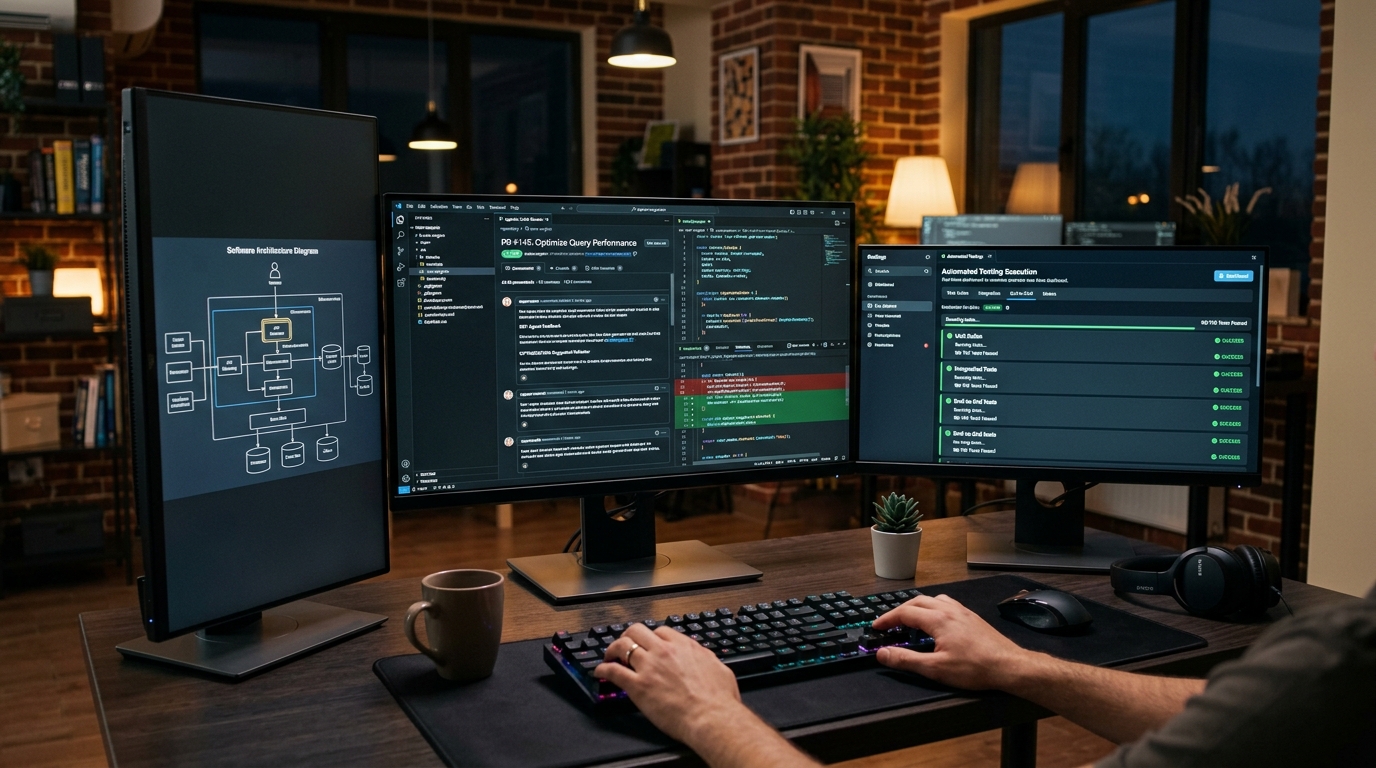
1. GitHub Copilot
Evolving far beyond inline suggestions, GitHub Copilot now provides cloud-based coding agents. Its agent inspects branch repositories, creates pull request diffs, runs test suites, and incorporates semantic codebase search. Furthermore, it integrates tightly with GitHub issues and project management boards.
2. OpenAI Codex
Modern Codex operates as an autonomous agentic development environment. Powered by advanced reasoning models like GPT-5.3-Codex, it handles end-to-end refactoring and parallel development across isolated cloud worktrees. It is ideal for developers delegating substantial engineering tasks.
3. Cursor
Cursor is an AI-native code editor engineered around autonomous agents. Its agent reads local codebases, modifies multiple files simultaneously, executes terminal commands, and resolves runtime bugs. Consequently, it represents a premier choice for developers seeking an integrated AI workspace.
4. Claude Code
Claude Code delivers a high-performance terminal agent from Anthropic. It interacts directly with local Git repositories, executes shell commands, and handles complex multi-step refactoring through natural language. Terminal-first engineers appreciate its speed and precision.
5. Google Gemini Code Assist
Deeply integrated into VS Code and JetBrains IDEs, Gemini Code Assist supports agentic multi-step execution. It connects seamlessly with Model Context Protocol (MCP) servers and enterprise Google Cloud infrastructure. In addition, Google has integrated advanced developer workflows into its Antigravity platform.
6. Amazon Q Developer
Amazon Q Developer serves as the definitive coding assistant for AWS cloud architectures. It offers automated code generation, refactoring, and security vulnerability scanning. Furthermore, its agentic capabilities help cloud engineers manage AWS infrastructure safely.
7. Replit Agent
Replit Agent enables a conversational “plan while building” methodology directly inside cloud browser environments. It designs software architecture, writes backend code, and deploys live web applications seamlessly from a single prompt.
8. Windsurf
Windsurf provides an AI-native development environment featuring Cascade agentic workflows. It orchestrates multi-step coding tasks with external tool integrations through MCP. As a result, developers maintain full context across complex features.
9. Tabnine
Tabnine specializes in enterprise privacy and zero-data-retention environments. It supports custom fine-tuned models, context-aware suggestions, and strict security controls. Large financial and healthcare institutions rely on Tabnine to safeguard proprietary codebases.
10. Sourcegraph
Sourcegraph delivers deep codebase intelligence for massive monorepos. Its Agentic Batch Changes allow engineering teams to execute coordinated refactoring across hundreds of repositories simultaneously. It provides critical context awareness for large enterprises.
11. Augment Code
Augment Code focuses on deep semantic codebase mapping. By exposing its high-speed Context Engine via MCP, Augment equips external coding agents with instant architectural understanding of multi-million-line repositories.
12. Qodo
Qodo addresses code quality, automated pull request review, and governance. Rather than merely generating code, Qodo verifies pull requests. Specifically, it enforces organizational standards, test coverage targets, and security policies.
13. Kiro
Kiro champions spec-driven agentic development. Instead of jumping blindly into implementation, Kiro guides teams through requirements, architectural designs, and task decomposition before agents write code. This structured approach prevents architectural drift.
14. Aider
Aider is a popular open-source pair programming tool for the command line. It pairs with local or cloud LLMs, maps Git repositories intelligently, and commits verified changes with descriptive commit messages automatically.
15. Continue
Continue provides an open-source, customizable AI assistant for VS Code and JetBrains. Supporting custom rules, local models, and MCP tools, it offers complete control for engineers wanting open-source flexibility.
Comparing Tool Categories by Development Workflow
Rather than seeking a single “best” tool, developers should select platforms matching their preferred workflow:
- Inline Autocomplete: GitHub Copilot, Tabnine.
- AI-Native IDE: Cursor, Windsurf, Kiro.
- Terminal-First Agents: Claude Code, Aider.
- Cloud & Browser Development: Replit Agent, OpenAI Codex.
- Enterprise Codebase Intelligence: Sourcegraph, Augment Code.
- Quality & Automated Review: Qodo.
Critical Risks and Security Considerations in AI Coding
While generative tools dramatically boost productivity, deploying unverified code introduces severe operational vulnerabilities. Development teams must mitigate these common risks:
- Hallucinated Dependencies: Agents occasionally recommend non-existent package names. Malicious actors exploit this through dependency confusion attacks.
- Security Flaws: AI models may generate insecure SQL queries, exposed credentials, or improper authentication flows without human scrutiny.
- Prompt Injection: Agents reading external documentation or untrusted files risk executing malicious instructions embedded in comments.
- Excessive Permissions: Never grant an agent unrestricted database access or permission to run shell scripts without approvals.
- Architectural Blindness: Relying blindly on generated code causes developers to lose intimate knowledge of their software systems.
When publishing sensitive software documentation, maintain strict editorial standards. Review our compliance guidelines in the E-E-A-T checklist for YMYL content.
A Practical 6-Step Agentic Development Workflow
To maximize efficiency while maintaining rigorous software quality, implement this structured engineering workflow:
- Specify Clear Requirements: Define expected behavior, API contracts, and edge cases before asking an agent to write code.
- Provide Architectural Context: Point the agent to relevant files, schema definitions, and coding standards.
- Review the Implementation Plan: Require the agent to outline its intended file changes before execution.
- Execute Modular Diffs: Allow the agent to modify code in small, testable chunks rather than rewriting entire systems.
- Run Automated Tests: Verify that unit tests and integration suites pass successfully without regressions.
- Inspect the Final Diff: Conduct a thorough human code review before merging changes into main branches.
For organizations automating client workflows, explore our pricing blueprints in how to price your AI automation agency services. Furthermore, discover how autonomous agents reshape workflows in our guide to 5 ways agentic AI automation transforms content strategy.
Additionally, discover how modern companies expand organic reach in our guide to Search Everywhere Optimisation for Indian businesses.
Frequently Asked Questions
What are the primary advantages of modern AI tools for coding?
Modern tools automate repetitive boilerplate, accelerate multi-file refactoring, assist with complex debugging, and generate comprehensive unit test suites. Consequently, developers focus on high-level architecture and system design.
Can AI coding agents write an entire production application?
While agents can build prototypes and multi-file modules, production software requires human architecture. Specifically, engineers must conduct security audits, database planning, and integration testing.
What is the difference between an AI coding assistant and an agent?
An assistant primarily provides inline suggestions and conversational answers. In contrast, an agent autonomously searches files, modifies code, executes shell commands, and verifies test suites.
Are AI coding tools safe for proprietary commercial codebases?
Yes, provided your organization configures enterprise zero-data-retention controls, restricts repository access, and enforces thorough human code review before production deployment.
To explore more software automation guides, developer tutorials, and AI industry analyses, visit the HuAI Content Blog. In addition, discover how synthetic image models function in our explainer on the science behind AI image generators.