
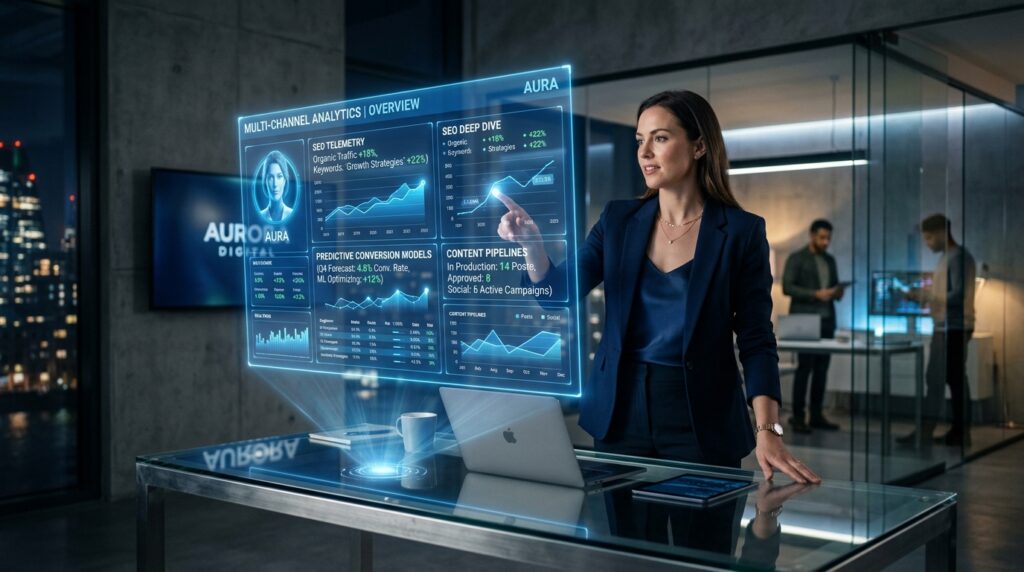
Artificial intelligence has rapidly transitioned from an experimental novelty into an indispensable component of everyday marketing operations. Modern generative models, predictive analytics, and natural-language processing engines can analyze consumer behavior, draft multi-channel copy, uncover conversion patterns, personalize email sequences, and manage customer interactions at unprecedented computational scale. That technological leap naturally prompts an urgent industry debate: will AI replace digital marketers?
In 2026, the question is no longer whether automated software can perform marketing tasks, but rather how the division of labor between human intuition and machine intelligence is being restructured. Instead of asking whether machines will render marketing teams obsolete, forward-thinking enterprises evaluate which workflows should be automated, which require strict human oversight, and where combining artificial intelligence with specialized expertise yields exponential commercial leverage. The reality is unambiguous: AI is fundamentally transforming the marketer’s strategic role rather than eliminating the profession.
At HuAI Content, we design and implement enterprise automation architectures that pair algorithmic efficiency with human creative governance, ensuring brands scale content output without compromising strategic differentiation.
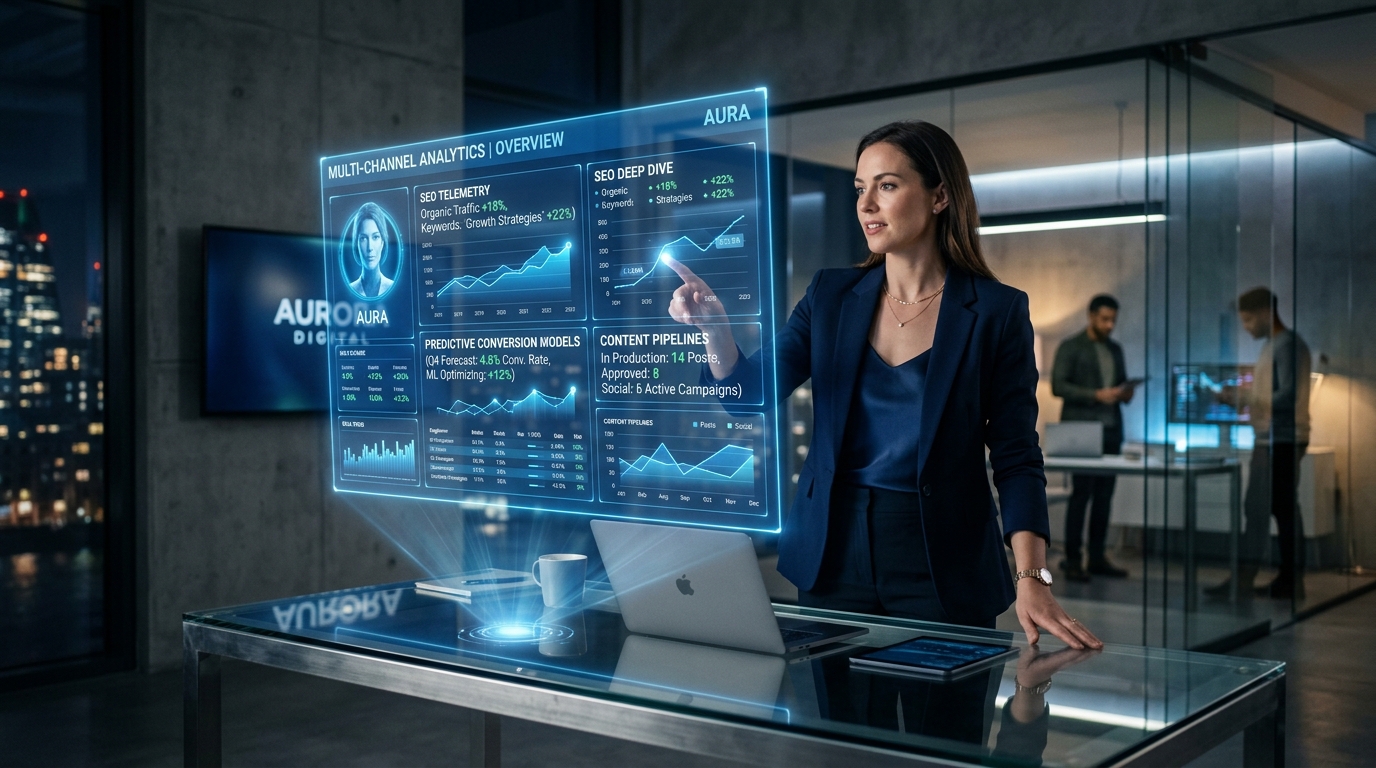
What Is Digital Marketing in the Modern Era?
Digital marketing encompasses the strategic promotion of brands, products, and services across interactive online channels—including search engines, websites, email, social platforms, programmatic advertising networks, streaming video, and conversational messaging apps. Unlike traditional broadcasting, digital channels provide continuous behavioral feedback loops, allowing marketers to measure audience engagement in real time.
Core disciplines within modern digital marketing include:
- Search Engine Optimisation (SEO): Maximizing organic discoverability across search engines and generative answer engines.
- Content Marketing: Publishing authoritative editorial assets that solve customer pain points and establish topical domain leadership.
- Performance & Paid Advertising: Deploying real-time programmatic bidding and audience targeting across search and social channels.
- Lifecycle & Email Marketing: Designing automated nurturing workflows that engage subscribers throughout the customer journey.
- Conversion Rate Optimisation (CRO): Conducting rigorous multivariate experiments to optimize user pathways.
- Marketing Analytics & Attribution: Synthesizing disparate customer data points into actionable commercial insights.
Today, machine learning models are actively integrated across every single one of these operational disciplines.
What Does AI in Marketing Actually Mean?
Within contemporary marketing operations, artificial intelligence refers to deploying machine learning algorithms, large language models (LLMs), computer vision, and autonomous agentic workflows to augment campaign execution. Rather than operating as a monolithic software program, marketing AI functions as an ecosystem of specialized capabilities:
- Analytical Systems: Processing historical sales velocity, website telemetry, and CRM pipelines to forecast demand.
- Generative Engines: Formulating creative headlines, social media snippets, email variations, and visual concepts in seconds.
- Conversational Agents: Engaging potential buyers 24/7 with context-aware product recommendations and technical support.
- Autonomous Agentic Workflows: Orchestrating complex multi-step processes—from initial keyword discovery to asset formatting and performance tracking.
An AI-driven marketing pipeline can instantly ingest campaign analytics, segment audience cohorts, propose creative variations, and flag underperforming ad sets for human review. However, the human marketer remains strictly responsible for evaluating whether those automated recommendations align with overarching brand positioning and commercial objectives.
What Can AI Do Better Than Humans?
When assessing whether will AI replace digital marketers, it is vital to recognize where machine learning inherently surpasses manual human bandwidth. Rather than assuming that will AI replace digital marketers overnight, industry leaders evaluate specific computational advantages. AI delivers decisive advantages across five major dimensions:
1. High-Velocity Data Analysis and Pattern Detection
Many professionals wondering whether will AI replace digital marketers point to computational data analytics as the primary threat.
Marketing teams routinely monitor disparate data streams: Google Analytics sessions, CRM pipeline progression, social ad impressions, email open rates, and return-on-ad-spend (ROAS) figures. AI algorithms parse millions of telemetry rows in milliseconds, pinpointing subtle correlations, audience fatigue patterns, and anomalous conversion drop-offs that human analysts might overlook for weeks.
However, statistical correlation does not equal commercial comprehension. While an algorithm flags an anomaly, an experienced marketer must deduce the contextual business reason behind it.
2. Hyper-Personalization at Enterprise Scale
Delivering tailored messages to individual consumer segments was historically cost-prohibitive. Machine learning allows ecommerce brands and B2B enterprises to dynamically personalize landing page content, product recommendations, and email copy according to company size, past browsing telemetry, and purchase propensity in real time.
3. 24/7 Automated Customer Engagement
AI-driven conversational assistants handle repetitive consumer inquiries around the clock. They assist prospective buyers with product specifications, order tracking, appointment scheduling, and basic troubleshooting without human delay. Optimal deployments route routine inquiries through conversational AI while seamlessly escalating high-value enterprise prospects or sensitive disputes to human team members.
4. Rapid Creative Variation and Asset Drafting
Generative models dramatically accelerate asset generation. Research published by HubSpot confirms that content drafting and brainstorming represent the most widespread marketing applications of generative AI. Systems generate dozens of ad headline iterations, email subject lines, blog outlines, and social drafts in seconds, eliminating blank-page paralysis for creative teams.
5. Continuous Multivariate Testing and Optimization
Rather than manually managing two-variant A/B tests, algorithmic bidding and CRO engines test hundreds of creative combinations, audience micro-segments, and call-to-action buttons simultaneously, automatically allocating budget toward the highest-performing assets.
Where Human Marketers Still Matter: The Irreplaceable Human Moat
Despite computational velocity, the most critical marketing decisions cannot be resolved by statistical models trained on historical data. Human professionals retain an enduring advantage in six fundamental areas:
1. Emotional Resonance and Consumer Empathy
The definitive counter-argument to the fear that will AI replace digital marketers lies in human emotional resonance.
Marketing is fundamentally an exercise in human connection. Understanding deep-seated customer anxieties, unexpressed aspirations, skepticism, or brand pride requires genuine emotional resonance. Algorithms can analyze sentiment scores, but only people truly grasp the emotional subtext of human lived experience.
2. Cultural Nuance and Social Context
A marketing narrative that thrives in North America may provoke offense or confusion in Southeast Asia. Human marketers possess the cultural fluency, humor, and contextual discernment necessary to navigate local sensibilities and trending social discourse safely.
3. Original Creative Direction and Brand Differentiation
Generative AI synthesizes existing internet data; it operates via mathematical probability to produce the most likely next token. Consequently, unchecked AI output inevitably regresses to the mean, creating generic, commodity copy. The central marketing challenge is never “Can AI generate an idea?” but rather “Is this idea bold, memorable, and uniquely defensible for our brand?”
4. Authentic Brand Storytelling
Enduring commercial brands are grounded in corporate ethos, foundational struggles, and human values. While AI can reformat a narrative across social formats, human leadership must author the authentic core story of what the company stands for.
5. High-Stakes Governance and Ethical Judgment
Automated algorithms lack ethical conscience; they ruthlessly optimize for whatever mathematical metric they are assigned. When marketing campaigns touch sensitive personal information, vulnerable customer groups, or regulated industries, human oversight is indispensable. For an in-depth exploration of compliance standards, read our guide on ethical implications of AI-driven marketing.
Particularly in financial, legal, and healthcare verticals, maintaining strict adherence to EEAT for YMYL content is vital for preserving consumer trust and regulatory compliance.
The Rise of Autonomous Agentic Marketing
The marketing landscape is progressing beyond isolated text prompts toward autonomous agentic execution. As examined in our strategic analysis of Agentic AI content strategy, agentic software can plan, coordinate, and execute multi-step workflows:
Audience Research → Competitive Analysis → Campaign Architecture → Multi-Format Asset Drafting → Channel Distribution → Real-Time Telemetry Tracking → Automated Iteration
While agentic systems unlock unprecedented productivity, increased software autonomy intensifies the requirement for explicit permission boundaries, review thresholds, and human accountability. Marketing leadership must treat AI governance as an essential operational discipline.
Connecting these automated workflows reliably requires modern infrastructure. Evaluating platforms such as n8n vs Make.com vs Zapier enables marketing teams to orchestrate secure, low-latency data pipelines that feed generative engines without risking API bottlenecks.
Will AI Replace Digital Marketers? Automation vs. Transformation
When addressing whether will AI replace digital marketers, the historical trajectory of technology provides clarity. Automating specific manual tasks is not equivalent to replacing an entire strategic profession.
A junior marketing assistant who spends thirty hours a week manually copying spreadsheet numbers, formatting social graphics, and compiling generic keyword lists will certainly see those mechanical duties automated. Conversely, a marketer who understands customer psychology, strategic brand positioning, economic unit economics, and creative orchestration becomes exponentially more valuable in an AI-abundant market.
Rather than replacing marketers, AI elevates their responsibilities from manual execution to strategic direction:
| Marketing Function | AI Algorithmic Responsibility | Human Marketer Strategic Role |
|---|---|---|
| Market & Audience Research | Aggregates telemetry, clusters behavior, and flags trends | Conducts qualitative customer interviews and extracts insights |
| Content Creation | Drafts outlines, generates copy variants, and summarizes assets | Injects original expertise, brand voice, and editorial standards |
| Paid Advertising | Calculates real-time bid adjustments and tests creative combinations | Defines commercial target ROAS, positioning, and budget allocation |
| SEO & Discoverability | Scans technical architecture and maps search intent clusters | Designs topical authority and sets editorial publishing roadmaps |
| Customer Support | Resolves repetitive, predictable inquiries instantly | Handles enterprise sales negotiations and sensitive disputes |
| AI Workflow Governance | Executes deterministic prompts and scheduled agent tasks | Audits output accuracy, sets guardrails, and ensures compliance |
To examine the granular mechanics of this collaborative relationship, explore our dedicated breakdown on the complementary roles of AI and digital marketers.
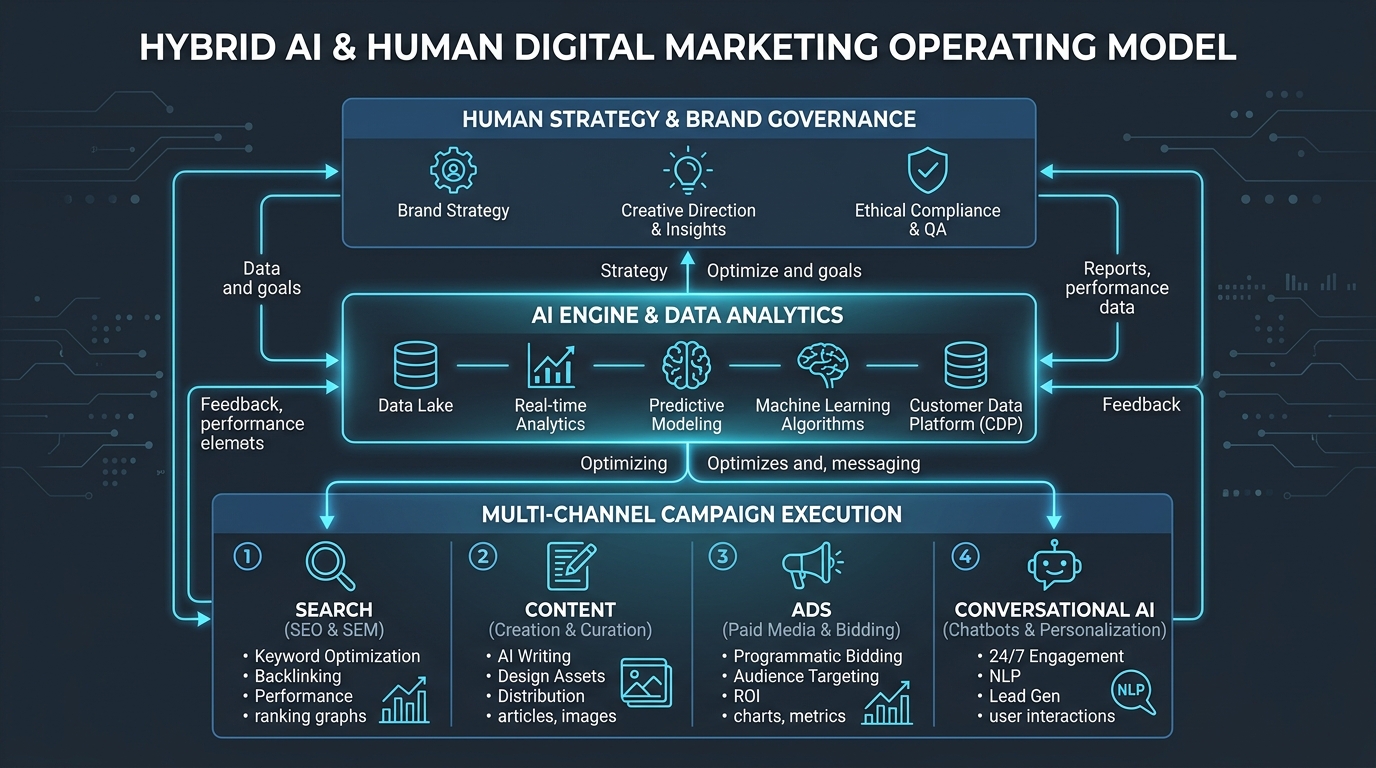
A Practical Hybrid Workflow: How Modern Teams Combine AI and Human Expertise
When organizations evaluate whether will AI replace digital marketers, high-performing marketing departments structure their daily operations around a disciplined hybrid framework:
- Human: Define Core Business Objectives — Establish target customer segments, commercial KPIs, and brand messaging boundaries.
- AI: Ingest Data and Surface Opportunities — Analyze competitor activity, customer search queries, and historical performance signals.
- Human: Select Strategic Direction — Determine which creative angle or campaign hypothesis to pursue.
- AI: Synthesize Asset Variations — Rapidly draft ad copy, social posts, email sequences, and visual concepts.
- Human: Editorial Refinement & Quality Control — Polish tone, verify factual claims, and align assets with brand ethos.
- AI: Coordinate Distribution & Telemetry — Schedule multi-channel delivery and track engagement in real time.
- Human: Interpret Outcomes & Iterate Strategy — Extract business lessons and recalibrate ongoing commercial tactics.
This division of labor allocates repetitive scale to machine intelligence while retaining strategic, creative, and ethical sovereignty in human hands.
For organizations evaluating the commercial economics of modernizing their internal capabilities, reviewing our guide on AI automation agency pricing in India provides transparent benchmarks on infrastructure and implementation costs.
AI and the Future of Search: Beyond Traditional Rankings
Artificial intelligence is fundamentally altering how consumers discover information online. Search engine algorithms have evolved into multi-layered synthesis engines, displaying AI Overviews and conversational answer interfaces.
Official guidance from Google confirms that ranking within AI-driven search experiences continues to rely on foundational SEO best practices: technical crawlability, descriptive internal linking structures, structured data markup, and people-first editorial value. Flooding the web with low-effort, synthetic AI articles directly triggers algorithmic spam penalties.
Sustainable visibility requires expanding from traditional search engine rankings into multi-platform discovery. This shift is why modern marketing strategies embrace Search Everywhere Optimisation, ensuring your brand is prominently indexed across TikTok, YouTube, LinkedIn, Reddit, and voice search.
Furthermore, learning how to get cited by ChatGPT and conversational LLM engines requires establishing verifiable digital citations and implementing a structured Pillar-Cluster Content Architecture that demonstrates undeniable topical authority.
To dive deeper into long-term industry projections and the hybrid agency model, read our forward-looking analysis on the future of digital marketing and human expertise.
Conclusion: Transformation, Not Replacement
The AI revolution in digital marketing is not a story of human obsolescence. It is a story of task redistribution and cognitive augmentation. Machines have claimed the domain of repetition, velocity, multivariate calculation, and baseline synthesis. Human professionals remain the essential custodians of empathy, strategy, cultural relevance, ethical discernment, and ultimate business accountability.
The most competitive marketing organizations of the next decade will not be those that deploy the largest quantity of autonomous software. They will be the teams that master how to harness AI’s computational velocity without sacrificing the human insight that makes marketing impactful. The question is not whether will AI replace digital marketers, but rather how rapidly ambitious marketers will embrace artificial intelligence to expand their strategic capabilities.
Explore more technical guides, case studies, and enterprise automation strategies across the HuAI Content blog.
Frequently Asked Questions (FAQ)
Will AI replace digital marketers completely?
No, will AI replace digital marketers completely is answered by historical technology shifts: AI automates mechanical, repetitive tasks (such as manual reporting, basic copy drafting, and bid adjustments), but human professionals remain indispensable for creative strategy, consumer psychology, brand storytelling, and ethical oversight.
Can artificial intelligence run digital marketing campaigns without human intervention?
While AI can execute individual automated steps, fully autonomous marketing campaigns introduce severe risks of brand drift, factual hallucinations, and regulatory non-compliance. High-performing campaigns require human marketers to set objectives, review creative assets, and supervise live performance.
What digital marketing tasks are best suited for artificial intelligence?
AI excels at large-scale data analysis, multi-channel personalization, multivariate A/B testing, 24/7 customer service triage, predictive lead scoring, and automated content repurposing.
What core skills should modern digital marketers develop in 2026?
Marketers should build robust AI literacy and workflow design skills while sharpening uniquely human competencies: strategic brand positioning, empathetic copywriting, qualitative customer research, data interpretation, and ethical AI governance.
Is AI-generated marketing content penalized by Google?
Google explicitly states that its search ranking algorithms evaluate the helpfulness, originality, and expertise (E-E-A-T) of content rather than how it was produced. However, publishing low-quality, automated content purely to manipulate search engine rankings violates Google’s search spam policies.
Editorial Disclaimer: This article is published for educational and informational purposes to explore modern enterprise technology adoption and does not constitute formal legal, advertising regulatory, or financial advice.
Pingback: AI and Digital Marketers: How They Can Work Together
Pingback: AI Marketing Ethics: Balancing Efficiency and Authenticity
Pingback: Future of Digital Marketing: AI and Human Expertise